

Best Practices for Managing Restaurant Reservations
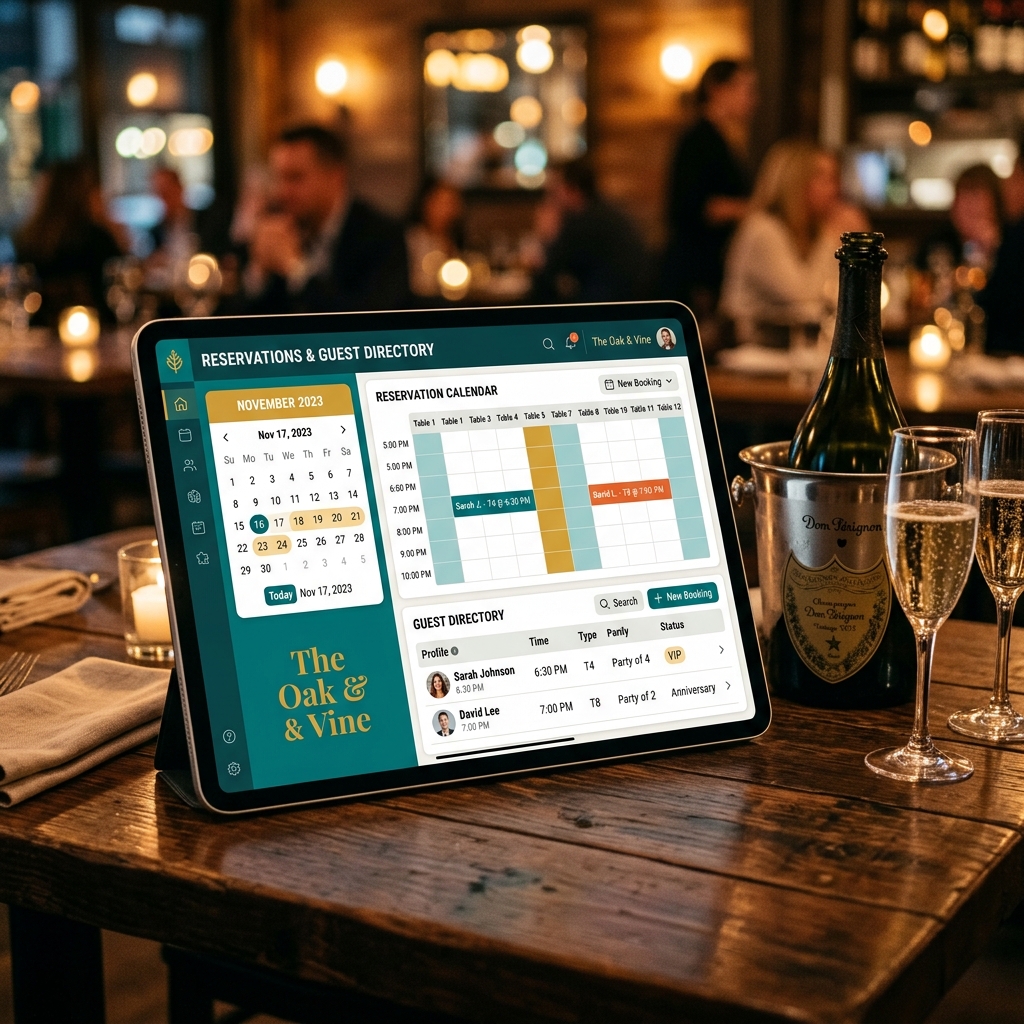
Managing reservations is a delicate balancing act. Overbook, and you end up with angry guests waiting in a crowded lobby. Underbook, and you look at empty tables during peak hours while turning away potential diners. A modern reservation system should act as the brain of your dining room, automatically calculating seating configurations and keeping your occupancy rate high without overloading your kitchen.
A Real-World Case Study: Let's look at a popular steakhouse that relies on manual phone reservations. They regularly book 4-top tables for couples because they lack visibility into real-time seating availability. This results in a 50% capacity loss on those tables. By switching to an automated system that matches party size with corresponding table sizes and blocks 2-tops for couples, they instantly save their 4-tops for larger, higher-spending groups, increasing nightly average spend by 18%.
Core Reservation Principles
- Implement Automated Table Assignment: Stop letting hosts assign tables manually on the fly. Let your reservation software automatically assign tables based on capacity, maximizing occupancy and minimizing gaps.
- Enforce a Punctuality Policy: Set a clear 15-minute hold limit on reservations. Send automated SMS reminders to guests 30 minutes before their booking, reminding them of the policy.
- Buffer Your Seatings: Don't schedule all reservations at 19:00. Stagger them in 15-minute increments. This prevents the kitchen and host stand from getting slammed at the same time.
- Analyze Historical Booking Patterns: Track your busy and slow periods. Use this data to adjust the number of reservation slots available online, reserving a portion of your tables for walk-ins on high-traffic days.
Structuring Reservation Gaps and Staff Roles
When looking at operational bottlenecks, the first point of failure is often the host stand. If hosts are not trained in flow control, they will seat tables too fast, flooding the kitchen. Staggering reservation arrivals in 15-minute windows is critical. Additionally, establish clear server zones. If one server is running cocktails while another handles mains, table coordination is clean. Train servers to pre-bus tables constantly. By the time guests ask for the bill, only water glasses and dessert plates should remain, cutting table resetting time by up to 5 minutes.
The Hidden Pitfall to Avoid
Never rely on a single channel for reservations. If you only take reservations by phone, you are missing out on the majority of modern diners who prefer booking online. Your reservation button should be prominent on your website and social media profiles.
Actionable Consultant Takeaway
Reservation management is about logistics, not luck. Implement software that automates seating arrangements and clear rules, and you will see your tables stay full and your staff stay organized.