
Cross-Training Employees in Restaurants
Most restaurant owners and managers get into this industry because they love food, hospitality, and creating memorable experiences. They do not do it because they want to spend hours tracking metrics, managing server conflicts, or auditing website code. Yet, ignoring these behind-the-scenes realities is why many promising venues struggle. To run a truly successful business, you must focus on the operational details that protect your margins, improve your FOH speed, and keep your tables full.
Restaurant staffing is a constant operational challenge, with high turnover rates and absenteeism disrupting service flow. Building a reliable team requires clear onboarding structures, standardized employee manuals, and consistent leadership, ensuring that staff feel supported and respected on every shift.
A Practical Scenario: Consider how this looks in a real kitchen. Sarah, a manager at a busy family cafe, faced a 75% annual staff turnover rate and regular weekend call-ins, leading to slow service and guest complaints. She created a visual onboarding program and implemented cross-training schedules. Within four months, turnover dropped by half, and weekend absenteeism fell to under 2%.
Key Strategies for Cross-Training Employees in Restaurants
- Write a Visual Employee Handbook: Move away from boring text manuals. Create a clean, visual handbook outlining exact service steps, grooming standards, and phone usage rules.
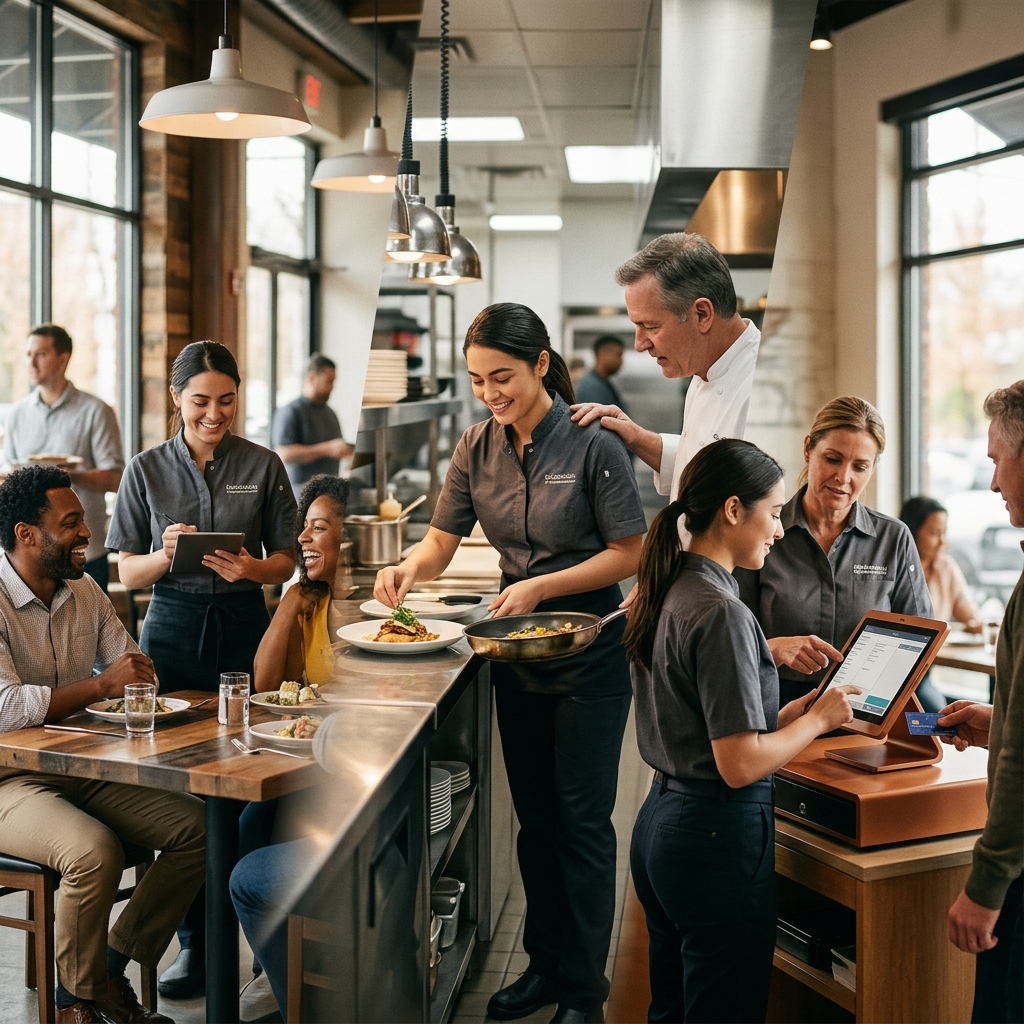
- Implement Staggered Cross-Training: Train FOH staff to run drinks or bus tables, and kitchen staff to handle multiple prep lines. Cross-trained teams handle unexpected rushes and sick days easily.
- Conduct Structured Performance Reviews: Schedule quarterly feedback sessions with shift leads and servers. Focus on recognizing achievements and defining clear growth targets within your business.
- Define Clear Conflict Resolution Steps: Establish standard steps for resolving employee disputes. Ensure shift managers handle team issues promptly and privately on the floor.
Improving Daily Communication and operational flow
Operational success requires FOH and BOH teams to communicate clearly. Appoint a dedicated expeditor to manage the kitchen pass during rushes, coordinating food runners so plates are delivered hot. Stagger reservation bookings in 15-minute intervals to prevent the host stand from flooding the kitchen. Standardize opening and closing checklists for both teams to maintain service quality and prevent hand-over errors.
The Critical Pitfall to Avoid
Never assume staff know how you expect things done without showing them. Standardize every task, from table cleaning to opening checks, using step-by-step guides to avoid training gaps.
Immediate Next Steps for Owners
Schedule cross-training sessions for your core staff next week. Build a flexible team that can handle any shift rush.