

How to Manage Multiple Restaurant Locations from a Single Platform
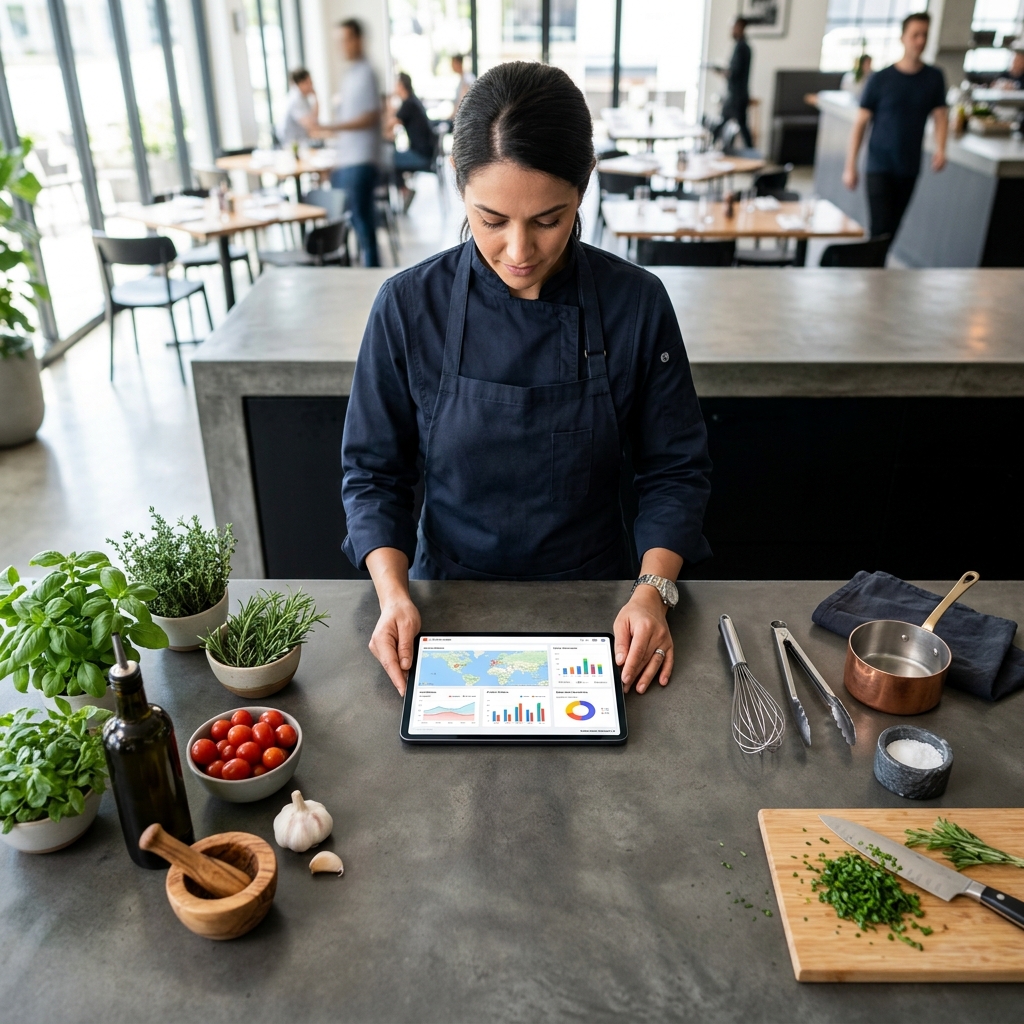
Managing a single restaurant is already a major daily challenge. When administering multiple locations simultaneously, operational complexity increases exponentially: reservation coordination, staff management, menu updates, marketing campaigns, customer retention, and results analysis all multiply.
Without good organization and technological centralization, it is extremely easy to lose control over service quality, reducing the overall efficiency of the business.
For this reason, more and more restaurant groups and chains are using a single centralized platform to manage all their locations in a more efficient, controlled, and scalable way.
In this article, you will see the practical keys to managing multiple restaurant locations from a single control center.
1. Centralize Information in a Single System
The first fundamental step is to avoid using separate or disconnected software tools for each location.
A truly multi-location and centralized platform should allow users to:
- Access and manage multiple locations from a single control panel.
- Assign specific roles and permissions for dining room staff, store managers, and general administrators.
- Get a global, integrated view of the entire group or chain in real time.
- Ensure fast, individualized access to each restaurant's panel if necessary.
This centralization drastically reduces errors and significantly improves the coordination of the entire business.
2. Reservation Control Across All Your Locations
Diner distribution and dining room capacity optimization are critical points when managing a restaurant group.
An integrated platform allows you to:
- View and manage the reservation status of all locations in real time.
- Intelligently distribute customer demand among nearby locations.
- Avoid unwanted cases of table overbooking.
- Analyze and compare occupancy rates by location to detect commercial opportunities.
This maximizes total revenue and improves the diner's booking experience.
3. Standardize Your Menus, but Maintain Local Flexibility
When expanding a restaurant business, it is crucial to maintain brand consistency in the culinary offer, without limiting the local adaptation that each location requires.
Technology allows you to manage:
- A shared base menu with the brand's identity dishes.
- Local variations of dishes and ingredients based on regional availability.
- Coordinated seasonal menus applied simultaneously.
- Specific local promotions for a particular restaurant.
This facilitates absolute control over margins and the offer without restricting the creativity or character of each location.
4. Centralized Customer Management (CRM)
Having a unified, multi-location CRM allows you to fully understand the global behavior of your regular diners.
With a single customer profile, you can know:
- Which customers visit different locations of the group repeatedly.
- The detailed frequency of visits at each restaurant.
- Gastronomic preferences and allergen requirements valid for the entire group.
- The complete history of interactions and guest feedback.
This information is gold for designing smarter, more effective, and personalized loyalty campaigns.
5. Centralized Marketing and Effective Campaigns
Managing digital marketing individually for each location is inefficient and dilutes your brand impact. With a single platform, you can program:
- Automated promotional and loyalty emails.
- Segmented communication campaigns based on customer behavior.
- Specific location-based offers to boost concrete venues on slow days.
- Coordinated invitations to culinary events or tastings.
This optimizes the marketing department's work and guarantees your brand consistency.
6. Comparative Performance Control by Restaurant
Having integrated analytics allows you to compare the performance of your locations in real time and with homogeneous metrics.
You can analyze and compare:
- Revenue and billing broken down by restaurant.
- Online booking volume vs. manual bookings.
- The average ticket consumption per guest at each location.
- Peak service hours and average table turnover.
- The general customer satisfaction at each location.
This facilitates strategic business decisions based on objective data, not just intuition.
7. More Efficient Staff Management
Coordinating dining room and kitchen teams across several restaurants is complex. A unified platform helps standardize operational processes, organize shift availability centrally, and assign access to business information securely based on each employee's role.
8. Consistency of Brand Identity
The customer expects to receive the same quality of service, treatment, and overall experience in any of your locations. A centralized digital platform provides your teams with the necessary tools to offer a homogeneous standard of hospitality, maintaining coherent communication and a unified corporate image across all digital interactions.
9. Automation of Operational Processes
Technological automation is essential to scale your restaurant business successfully:
- Automatic confirmations and SMS/email reminders to avoid no-shows.
- Automation of satisfaction survey flows after guest visits.
- Automatic birthday greeting campaigns with associated gifts.
- Massive and instant updates of dishes and prices from the cloud.
This frees your managers from administrative burdens, reducing human error to a minimum.
10. Common Mistakes When Managing Multiple Restaurants
- Using different software programs or computer systems at each location.
- Lack of communication and information sharing between restaurant teams.
- Not having a global perspective of financial and operational performance.
- Having customer data fragmented and unusable.
- Lack of standardization in service operations.
Conclusion
Managing multiple restaurants successfully and profitably requires data centralization, operational automation, and a global, integrated view of the entire business. Adopting a single platform simplifies reservation control, diner relationships, marketing, and operations, which decreases costs and favors group scalability.
Scale Your Restaurant Group with Saboraa's Single Platform
With Saboraa, you can centralize the management of all your restaurants from a single smart system, facilitating your growth:
- Centralized multi-location panel: View and change the configuration of any of your restaurants instantly from the same user.
- Integrated real-time reservation management: Manage capacity, table layouts, and waiting lists for all your locations without duplicating efforts.
- Unified guest CRM: An integrated database that shares profiles and preferences of your diners across all your restaurants.
- Comparative reports and analytics: Compare the financial and operational performance of your locations at a glance.
- Exhaustive control of roles and permissions: Configure custom access for your executive team, venue managers, and waiters.
Make scaling your business simpler, not more complicated. Try Saboraa today and take your restaurant group to the next level.