

Integrating Restaurant Software Systems Effectively
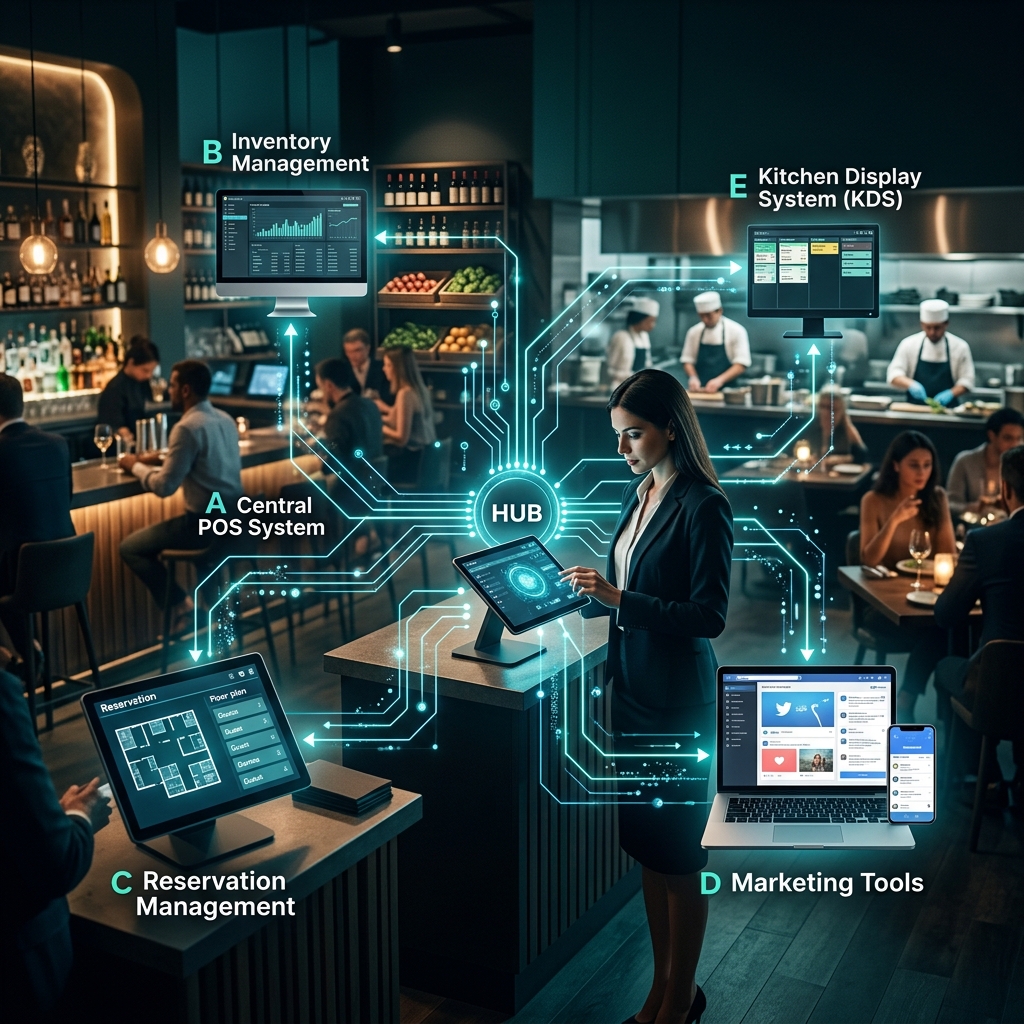
Most restaurant owners and managers get into this industry because they love food, hospitality, and creating memorable experiences. They do not do it because they want to spend hours tracking metrics, managing server conflicts, or auditing website code. Yet, ignoring these behind-the-scenes realities is why many promising venues struggle. To run a truly successful business, you must focus on the operational details that protect your margins, improve your FOH speed, and keep your tables full.
Relying on paper books and manual spreadsheets holds your restaurant back. Modern, integrated software tools—from cloud-based POS and scheduling apps to inventory managers—save administrative hours, eliminate human errors, and protect profit margins.
A Practical Scenario: Consider how this looks in a real kitchen. A pub group spent hours entering invoices and calculating staff shifts manually on spreadsheets, leading to errors. They adopted an integrated cloud POS and scheduling platform. Admin hours fell from 12 a week to just 2.
Key Strategies for Integrating Restaurant Software Systems Effectively
- Choose a Unified POS Hub: Select a cloud POS that acts as the central hub of your restaurant, syncing transactions with inventory, scheduling, and accounting tools.
- Automate Staff Scheduling: Use digital scheduling apps that let staff swap shifts, log hours, and view schedules on their phones, reducing manager spreadsheet tasks.
- Track Digital Inventory Levels: Use inventory software that calculates stock depletion automatically based on recipe sales data, alerting you when items run low.
- Integrate Your Tools Effectively: Avoid software silos. Ensure all your digital tools connect via open APIs, keeping your sales, scheduling, and inventory data unified.
Moving from Manual Spreadsheets to Cloud Software
Managing inventory or shift schedules on spreadsheets is slow and prone to human error. Cloud-based restaurant software automates these tasks, tracking sales traffic and labor costs in real-time. Choose tools that integrate with your POS via open APIs. Train your staff thoroughly before launching new software to prevent FOH friction during dinner rushes, ensuring a smooth transition.
The Critical Pitfall to Avoid
Never purchase new technology without training your team. A complex software system will fail if FOH and BOH staff do not know how to operate it during peak dinner rushes.
Immediate Next Steps for Owners
Identify one spreadsheet task you do weekly (like invoice entries or shift planning) and find a digital tool to automate it next week.