

Restaurant CRM: What It Is and How It Helps Build Customer Loyalty
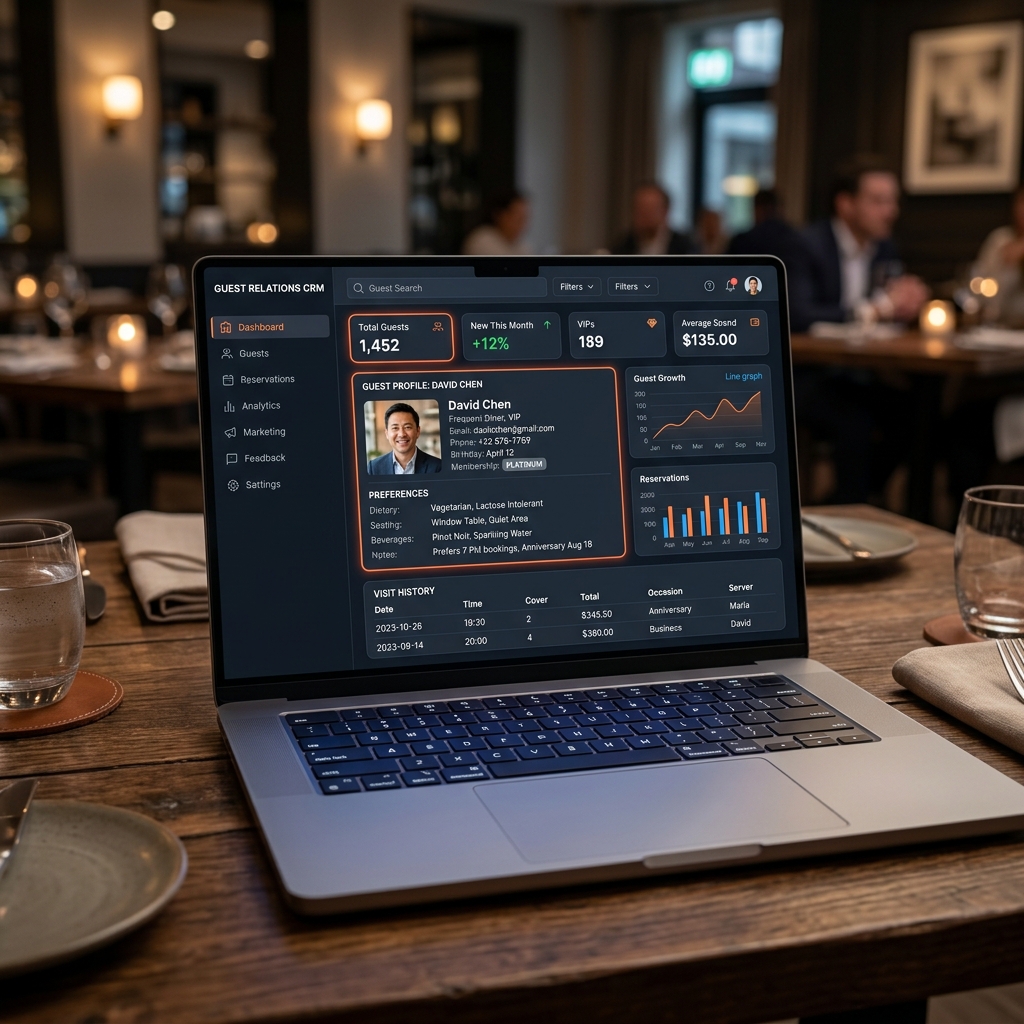
Many restaurants dedicate a large part of their efforts to attracting new customers, but they often forget a fundamental reality: getting a customer to return is usually much more profitable than acquiring a new one.
This is where a restaurant CRM comes into play.
A CRM (Customer Relationship Management) allows you to store information about your customers, understand their habits better, and create more personalized experiences that increase loyalty.
In this guide, you will discover what a restaurant CRM is, how it works, and why it has become an essential tool for hospitality businesses in 2026.
What is a Restaurant CRM?
A CRM is a tool that allows you to collect, organize, and manage information related to a restaurant's customers.
Among the data it can store are:
- Name and contact details
- Reservation history
- Visit frequency
- Gastronomic preferences
- Special dates like birthdays or anniversaries
- Staff comments and observations
- Marketing campaign history
All this information helps to offer a more personalized service and build long-lasting relationships with customers.
Why is Customer Loyalty Important?
Many restaurants focus their entire strategy on acquiring new customers, but returning customers usually:
- Visit the restaurant more frequently
- Spend more money in the long run
- Recommend the business to family and friends
- Leave better online reviews
- Are less sensitive to competitor promotions
For this reason, building customer loyalty must be a priority in any growth strategy.
Benefits of Using a CRM in a Restaurant
1. Know Your Customers Better
A CRM allows you to understand who your customers are and how they interact with your restaurant. For example:
- Which dishes they usually order
- How often they book
- Which promotions generate the most interest
- What their usual visit times are
This information facilitates decision-making and allows you to offer a more personalized experience.
2. Personalize Communication
Customers increasingly value personalized experiences. With a CRM, you can send specific communications based on their visit history, interests, culinary preferences, and consumption frequency.
For example, a customer who usually books for romantic dinners could receive information about special events for couples.
3. Automate Marketing Campaigns
Automated campaigns allow you to maintain contact with customers without increasing the team's workload. Some examples:
- Birthday messages: Send a discount or a special invitation to celebrate their birthday.
- Visit reminders: Contact customers who have not visited the restaurant for several months.
- Segmented promotions: Send offers only to customers who are likely to be interested.
4. Increase Repeat Reservations
A CRM helps identify opportunities to encourage repeat visits. For example, it detects customers who have not returned for 90 days, customers who visit the restaurant once a month, or customers who usually visit during certain seasons. With the right campaigns, it is possible to significantly increase the repetition rate.
5. Improve Customer Experience
Imagine a regular customer reserves a table. Thanks to the CRM, the staff can know that they prefer to sit on the terrace, have a registered food allergy, or regularly celebrate anniversaries at the restaurant. This level of personalization generates a memorable experience and strengthens the relationship with the customer.
What Features a Restaurant CRM Should Have
Not all CRMs are designed for hospitality. The most useful features are:
- Customer Management: Centralized database, complete interaction history, and customer segmentation.
- Reservation Integration: Booking history, cancellation control, and attendance tracking (no-shows).
- Marketing Automation: Automated emails, promotional campaigns, and personalized reminders.
- Reports and Statistics: Returning customers, visit frequency, average value per customer, and campaign performance.
Practical Case Study
Suppose a restaurant has a database of 1,000 customers. Through the CRM it detects that:
- 250 customers have not returned in the last 6 months.
- 120 customers celebrate their birthday during the next month.
- 80 customers regularly visit on weekends.
With this information, you can launch specific campaigns for each group and increase bookings without spending large amounts on advertising.
Common Mistakes When Implementing a CRM
- Collecting data and not using it: Many businesses store information but never analyze it or use it to improve customer relationships.
- Sending too many communications: Excessive messaging can have the opposite effect and cause contacts to unsubscribe.
- Not segmenting customers: Sending the same message to the entire database usually yields worse results than segmented campaigns.
- Not keeping data updated: The quality of a CRM depends on the quality of the stored information.
How to Start Using a CRM in Your Restaurant
- Centralize all customer information.
- Record reservations and interactions.
- Segment your customers based on behavior.
- Create simple automated campaigns.
- Analyze results periodically.
- Adjust the strategy based on the data obtained.
It is not necessary to implement complex processes from day one. The important thing is to start collecting useful information and use it to improve the customer experience.
Conclusion
A restaurant CRM is not just a tool for storing data. It is a solution that allows you to understand customers better, personalize communication, increase loyalty, and generate more revenue in the long run.
In an increasingly competitive sector, restaurants that leverage customer data have a significant advantage over those that continue to manage relationships manually. Loyalty does not happen by chance. It is built through memorable experiences and appropriate communication, and a CRM is one of the best tools to achieve it.
Manage Your Customers and Reservations from a Single Platform
With Saboraa, you can centralize the management of reservations, customers, and communication in a single tool:
- Complete customer history: Securely store guest profiles, allergies, and preferences.
- Online reservation management: Receive and organize your tables in real time without intermediaries.
- Centralized database: Unify data from web bookings, QR codes, and phone calls in one place.
- Customer segmentation: Identify your most loyal customers or those who haven't visited in a while.
- Loyalty building tools: Design automated and personalized campaigns.
- Restaurant website integration: Perfect synchronization between your site and your guest directory.
Discover how smart customer management can help you increase repeat bookings and grow your restaurant.